Poker and Brain Health: The Cognitive Benefits of Playing With Your Head
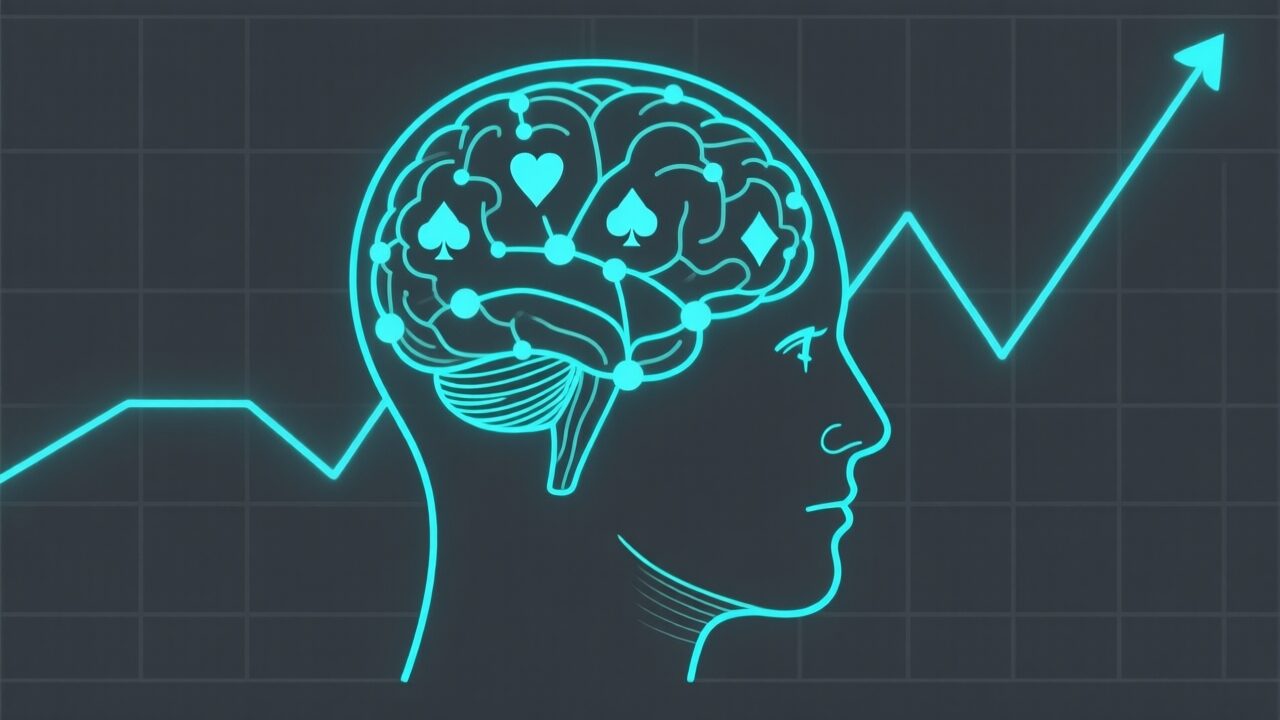
There’s a widespread belief that poker is a game of luck. Anyone who has played 500 hands knows better: luck deals the cards, but your head decides what to do with them. And that “deciding what to do” (repeated thousands of times, under pressure, with incomplete information) looks a lot like structured cognitive training.
This article doesn’t sell miracles. Poker won’t cure Alzheimer’s or add fifteen points to your IQ. But it does exercise, measurably, a handful of brain functions that neuroscience has studied for decades: decision-making under uncertainty, working memory, impulse control and probabilistic reasoning. Let’s look at which ones, why, and how to train them deliberately.
Deciding with incomplete information: the core muscle
Most of life’s important decisions (investing, hiring, changing jobs, treating a patient) are made without knowing all the facts. Poker is one of the few everyday activities that forces you to do exactly that, hundreds of times per session, and hands you a scoreboard on top.
When you decide whether to call a bet on the river, your brain is running a real-time Bayesian calculation: you start from a prior (what hands the opponent might hold), update it with each new clue (they raised preflop, bet big on the turn, now they slow down) and compare the result to the price the pot is offering. That process, updating beliefs as new information arrives, is one of the purest forms of rational thinking there is, and poker trains it through sheer repetition.
Annie Duke, world champion and a cognitive psychologist by training, built an entire decision framework (“thinking in bets”) on this idea: separating the quality of a decision from its outcome. A good player learns to judge whether they chose well given what they knew at the time, even when the card falls badly. That mental discipline, resisting hindsight bias, transfers to any domain where you decide under uncertainty.
If you want to see the mechanism laid bare, nothing beats playing with the numbers in front of you: the pot odds calculator teaches you to compare the price of a call against your probability of winning: the Bayesian decision stripped to its skeleton.
Working memory: keeping many pieces in the air
Working memory is the mental whiteboard where you hold and manipulate information for a few seconds: the number you’re about to dial, the steps of a recipe, the argument you want to counter. It’s one of the cognitive functions most tied to fluid intelligence, and one of the first we notice slipping with age or stress.
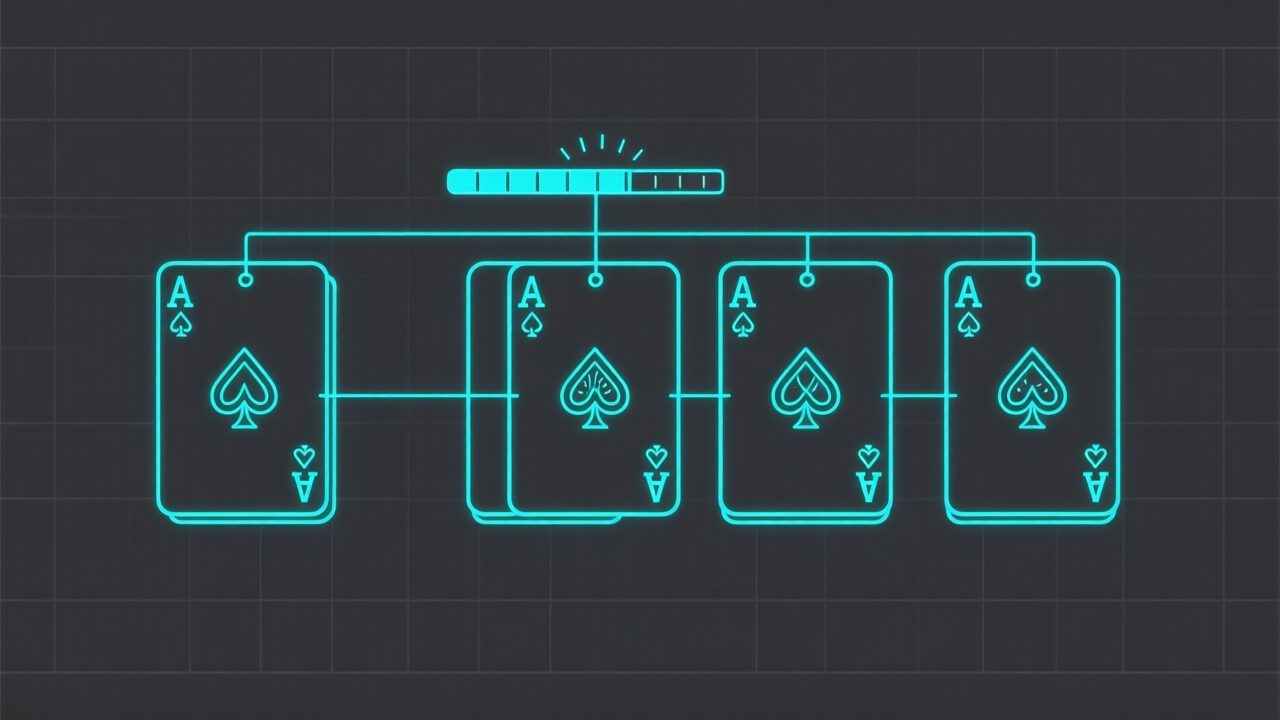
A single poker hand loads it heavily. You have to hold, all at once:
- your two cards and how they connect with the five community cards;
- the size of the pot and how much each player has bet;
- the tendencies of three or four opponents accumulated over the session;
- your own table image (what they think you have).
None of that is written in front of you. It lives in your head, updates every second, and shapes the next decision. Playing well is, literally, juggling working memory for hours. Counting outs (the cards that improve your hand) and translating them into a probability on the fly is an exercise for that same mental whiteboard, one you can drill in isolation until it becomes automatic.
Emotional control: “tilt” as a self-regulation lab
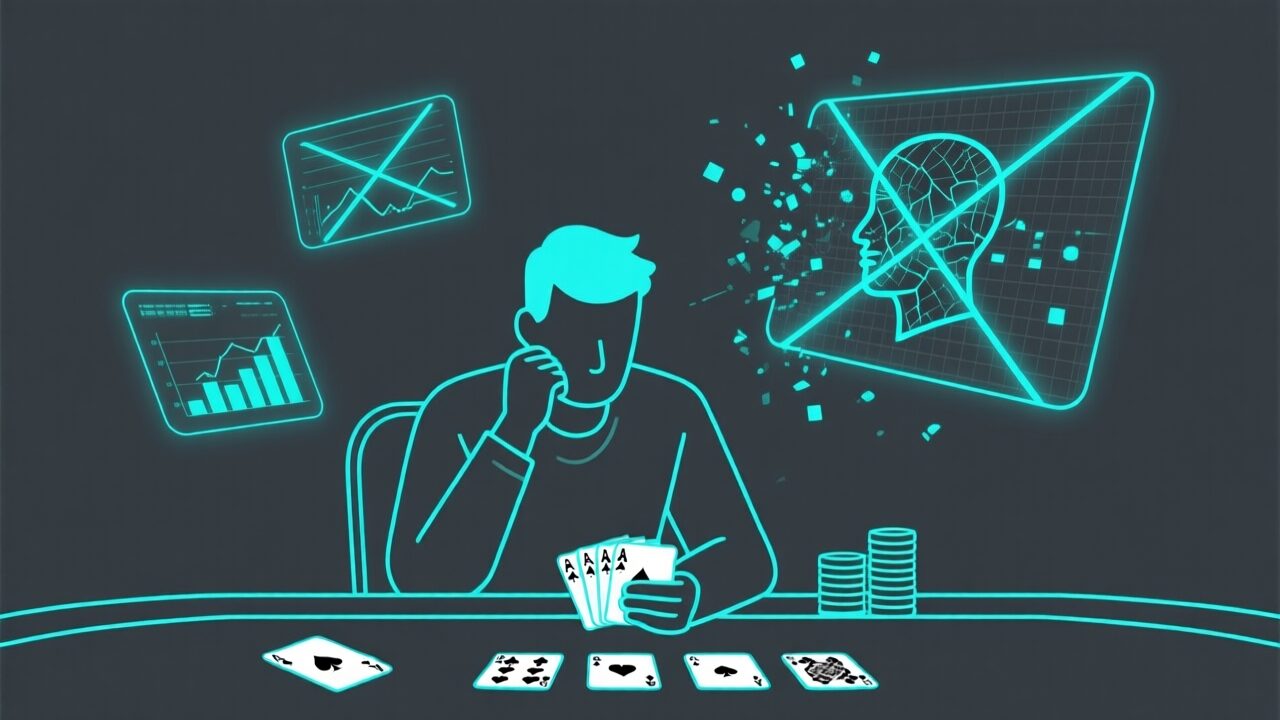
This is where poker gets interesting as training, because it doesn’t just demand that you think well: it demands you think well while things go wrong. Losing three hands in a row as the favorite triggers the same frustration responses as a traffic jam or an argument. Players call it tilt: the state where emotion hijacks the decision and you start playing worse exactly when it matters most.
Learning to recognize tilt, breathe, and go back to deciding by probabilities instead of by anger is a direct exercise in emotional regulation: the prefrontal cortex keeping the limbic system in check. That’s no small benefit: emotional regulation predicts long-term success better than almost any other skill, at the table and away from it.
Poker’s great advantage as an emotional gym is that the cost of failing can be zero. Train without real money and tilt becomes a safe laboratory: you can provoke it, watch it, and rehearse your response over and over without a bad streak costing you anything but a few points. That’s exactly the philosophy behind bit.poker (train the decision, don’t gamble), which is why there are no buyable chips or redeemable prizes here.
Probabilistic thinking: intuition for the numbers
Very few people have reliable intuition for probability. Our brains evolved to spot patterns and threats, not to estimate frequencies. That’s why we overrate the improbable (the plane) and underrate the everyday (the car).
Poker corrects that bias through feedback. Once you’ve seen a flush draw complete roughly 35% of the time from the flop a thousand times over, you stop feeling that “this time it’s due” and start operating on the real frequency. That recalibration, from hunch to estimate, transfers: the same person who learns not to chase a draw without the right odds tends to grow more skeptical of alarmist headlines and promises of guaranteed returns.
The most honest tool for building that intuition is the equity calculator: plug in two hands, simulate thousands of deals, and it gives you the true win percentage. Seeing it with your own eyes, many times, is what builds the intuition no theory lecture can. And when you want to level up, the range visualizer forces you to think not about one hand but about the whole spread of hands an opponent could hold: probabilistic thinking in its most advanced form.
What about “cognitive reserve”? What the science does and doesn’t say
There’s a solid hypothesis in neuroscience (cognitive reserve) that mentally demanding activities across a lifetime help the brain resist age-related decline better. The studies behind it tend to group strategy games, language learning, reading and playing instruments: activities that combine novelty, complexity and sustained engagement.
Poker fits that description almost by the book: it’s novel (no two hands are identical), complex (it blends math, psychology and risk management) and demands sustained attention for hours. It’s reasonable to think it contributes to that reserve much as chess or bridge do, games that already have specific literature behind them.
Now, honesty requires limits. There is no evidence that poker prevents neurodegenerative disease, and anyone claiming otherwise is selling you something. What is well documented is that the functions poker exercises (attention, working memory, inhibitory control, reasoning) respond to training like any other capacity. Use it or lose it. Poker is simply an unusually entertaining way to use them.
How to train your brain with poker (without gambling)
If what you’re after is the cognitive benefit and not the money game, the good news is that they separate easily. In fact, money is mostly noise: it injects fear and greed that muddy the decision signal. To train your head, here’s what works:
- Play for decisions, not results. After each hand, ask whether you decided well with the information you had, not whether you won. That’s Annie Duke’s habit, and the most valuable one.
- Automate the arithmetic. Count outs, work out pot odds and compare them until it’s automatic. When the math runs itself, your working memory frees up for the hard part: reading the opponent.
- Think in ranges, not hands. Stop asking “what does he have?” and start with “what spread of hands would someone who played it this way hold?” The range visualizer trains exactly that leap.
- Repeat in a safe environment. Repetition is what fixes learning, and you only truly repeat when failing doesn’t hurt. Drill spots over and over in your training and let the streak, not your wallet, be the scoreboard.
Poker rewards your head with the same currency you demand from it. Treat it like a gym (reps, technique, rest, zero real money) and you’ve got one of the most complete and addictive mental workouts around. Treat it like a casino and you train nothing; you just gamble. The whole difference is in how you play it.