Poker Bots: Why They're Cheating, How Sites Catch Them, and What You Can Actually Learn From Them
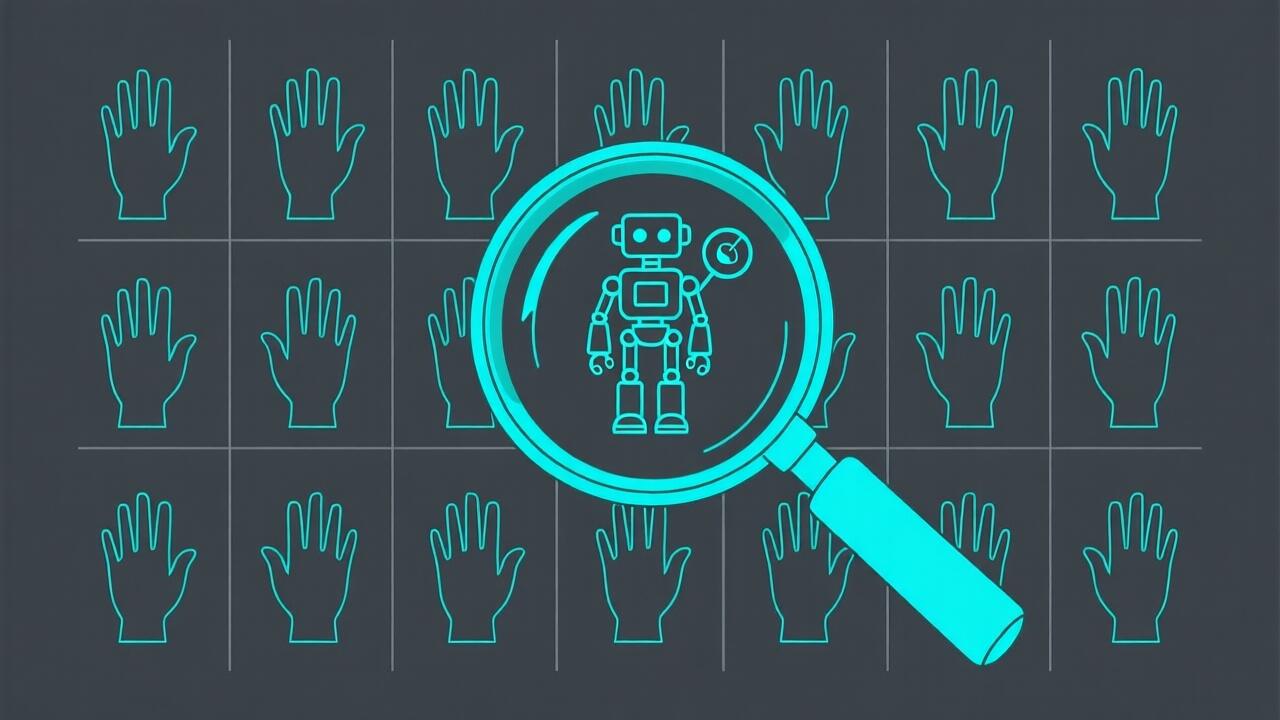
We already saw that a machine can win at poker: Libratus and Pluribus proved it against elite players. Going from there to running a bot that plays for you on an online site is a jump worth understanding, because it changes completely what we’re talking about. A bot in a lab is science. The same bot at a real-money table is fraud, and one that gets caught.
This article separates the three things people blur together: why using a bot is cheating, how sites actually detect it, and which part of the technology you can genuinely use without crossing any line.
Why it’s cheating (and not an opinion)
The argument doesn’t need morality: it’s contractual and economic. Every poker site bans automated play in its terms of service, no exception. When you open an account, you sign that you play, a person, in real time. A bot breaks that contract from the first hand.
The harm is concrete. On the other side of the table are people who put down their money believing they compete against other humans on equal footing. A bot that computes EV in milliseconds and never gets tired isn’t playing them on equal footing; it bleeds them dry. That’s why the sites selling these services hide behind the tagline “for research and entertainment only” and push all the responsibility onto you: they know perfectly well that what they offer violates the ToS of every site it runs on, and in many places it’s plain fraud.
And the consequences land on the user, not on whoever sold the software. When a bot account gets caught, the norm is immediate closure, confiscation of the balance, and increasingly redistribution of that money to the victims. You paid 2,000 dollars for the program only to end up with no account and no funds.
How sites detect them
This is the part almost nobody explains, and the most useful to understand. Big sites have game-integrity teams dedicated to nothing else, and they don’t rely on a single signal, they cross-reference many. These are the main ones.
Decision timing. A human takes different amounts of time depending on the hand: thinking hard on a tough river call, snapping off a trivial fold. Bots are either too consistent, or they randomize in a way that doesn’t look human either. Modeling the action-time distribution of an account across thousands of hands reveals patterns no person produces.
The statistical fingerprint of the strategy. This is the hardest thing to hide. Over a million hands a person makes mistakes, shifts mood, has leaks. A bot plays near-perfect frequencies and bet sizes with superhuman consistency. That regularity is itself a signature. A strategy that is too optimal can be flagged the same way a pattern that is too clean can be.
Input biometrics. A human mouse trembles, accelerates, corrects. Clicks have micro-variations. Automation software moves the cursor in straight lines or clicks with a precision no human tendon has. Many sites log these micro-movements.
The device environment. They detect the signatures of known automation software, whether you run inside a virtual machine, or whether something is reading the client’s memory or scraping the screen. The bot itself leaves traces on the system.
The account graph. Accounts funded from the same place, playing on the same schedule, picking seats the same way, or coming from the same device fingerprint despite different proxies. Multi-accounting, which is how these services promise to really earn, is also what most easily links them together.
On top of all that come reports from other players and human review of flagged cases. That’s why the vendors talk about residential proxies, unique IPs and rotating accounts every few weeks: it’s an arms race they’re gradually losing, and the one who pays for the broken pot is the customer.
What you can actually learn from them
Here’s the part that genuinely helps you, because the strategy of these bots is public and legal to study. What’s banned is running software during play, not learning how it thinks. The difference is total: using a solver or a trainer away from the table to improve is normal and recommended; connecting any real-time help while you play for money is cheating. With that line clear, here’s the usable part:
- Balance instead of tricks. Bots win by being unreadable, with no pattern to exploit. Value-bet and bluff in consistent proportions. Estimating your equity well is the foundation, and you drill it on its own with the equity calculator.
- Variety in bet sizing. Pluribus’s big lesson was using sizes humans had dismissed. Drop the automatic “half pot” and pick the size based on the opponent’s range.
- Think in ranges, not hands. No bot guesses two specific cards: it works with the whole possible spread. The range visualizer trains that view.
- Zero tilt. The bot plays just as well after a bad river as before. That coldness is the one thing you can copy 100% today, without knowing any more theory.
The honest shortcut isn’t automating, it’s training. You can practice balance, sizing and range reading with real hands, scored against the correct play, in your training, and test lines against bots in the table simulator, where the bot is there to teach you and not to rob anyone. You gain the skill a bot gives without risking your account, your money or your name.